

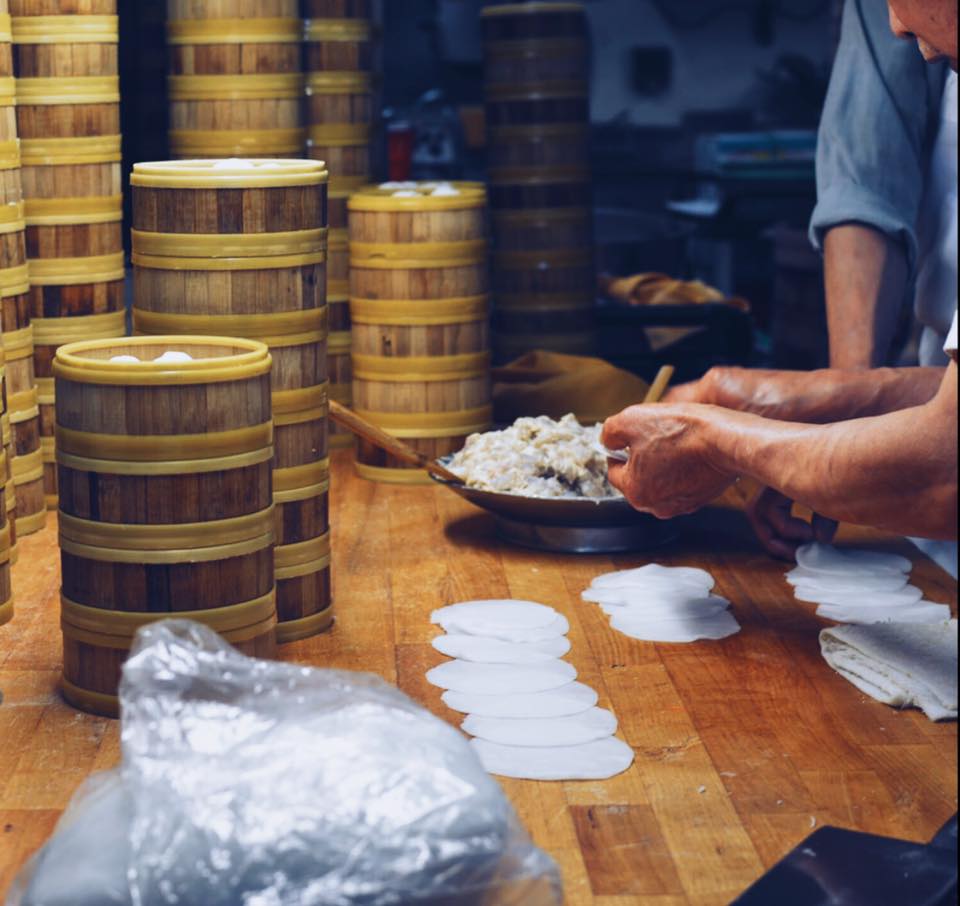
Every Bay Area restaurant owner has the same folder on their phone: two hundred photos of finished plates and almost nothing else. The food looks great. The food always looks great. And yet the posts that pull the most saves, the most shares, and the most “we came in because of your story” comments are almost never the hero shot of the dish. They’re the 6am prep shot. The line cook laughing mid-service. The hands folding dumplings at a floured board while bamboo steamers stack up behind them.
This is the content pillar most restaurants leave completely untouched, and it’s free. You already own it. It happens every single day between 5am and close, and right now it’s walking out the back door unrecorded. This is the playbook for capturing it without slowing down service, without making your staff uncomfortable, and without turning your feed into a reality show.
Why Behind the Scenes Beats the Plated Shot
Here’s the uncomfortable math. A perfectly lit photo of your salt and pepper crab is competing with every other perfectly lit crab photo in San Francisco, plus the professionally shot version on the delivery app, plus whatever a food influencer posted yesterday. It’s a beautiful photo in an ocean of beautiful photos, and the algorithm treats it accordingly.
A photo of your chef pulling a whole fish out of the steamer at 11:40am is competing with nothing, because nobody else has it. That’s the entire advantage. Behind the scenes content is inherently unrepeatable — it can only come from inside your building — and platforms reward things they haven’t seen before. It also does something the plated shot structurally cannot do, which is answer the question every diner is quietly asking: is this place actually good, or does it just photograph well? Watching someone hand-fold a hundred and forty dumplings before doors open answers that faster than any caption you could write.
The pattern shows up clearly in the numbers when Bay Area restaurants start posting this way. Finished-plate posts collect likes. Process and people posts collect saves, shares, and comments — and saves and shares are what actually push your content into feeds of people who don’t follow you yet. One is applause from your existing audience. The other is distribution.
The Four Moments Worth Filming Every Week
You don’t need a documentary crew. You need four repeatable moments, and every restaurant already has all four.
The prep moment. Anything made by hand before service. Dough getting rolled, dumplings getting pleated, crepe batter going down on the griddle, a whole duck getting hung, stock going into a pot the size of a bathtub. This is the highest-value footage in your entire restaurant and it happens on a fixed schedule, which means you can plan for it. Set a recurring alarm for whenever your most photogenic prep task happens and film thirty seconds.
The fire moment. Anything loud, hot, or fast. A wok flaring, a torch hitting nigiri, a pizza going into a deck oven, a hot plate hitting the pass and steaming. This is your Reel hook. You have about one second to stop a thumb and nothing stops a thumb like flame. Film it in slow motion if your phone supports it, and get the microphone close enough to catch the sound, because the sizzle is doing half the work.
The people moment. Your team doing something they’re good at, or being human with each other. The dish going out with a small flourish. The bartender explaining a mezcal to a regular. Two servers cracking up during a pre-shift meeting. These posts build the thing you cannot buy, which is the feeling that there are actual people in there who care.
The room moment. Your dining room in the twenty minutes before doors open, or at 7:30 on a Friday when it’s full and loud. Empty-and-ready is calm and cinematic. Full-and-loud is social proof. Both work, and most restaurants film neither.
Get Your Staff on Camera Without Making It Weird
This is where most owners stall out, and the hesitation is legitimate. Restaurant teams in the Bay Area are often multilingual, often include people who have very good reasons not to want their face on the internet, and are already working hard enough without being asked to perform.
So make it opt-in and make it explicit. Ask once, in a pre-shift meeting, in whatever language the room actually speaks: who’s comfortable being filmed, who’s comfortable being filmed but not their face, and who wants to be left out entirely. Write it down. Respect it permanently, and re-ask every few months as new people come on. Nobody should have to decline in the moment while you’re standing there with a phone.
The good news is that hands-only footage is often better anyway. Hands folding wontons, hands plating, hands pouring — it’s anonymous, it’s universally readable, and it keeps the focus on craft instead of personality. Some of the strongest restaurant accounts on the Peninsula have never shown a single face and are entirely built on forearms, knives, and steam.
For the people who are comfortable, go further than you think you should. Name them in the caption. Say how long they’ve been with you. A post that says your kitchen lead has been folding these by hand for eleven years does more for your brand than a month of dish photos, and it does something for that person too. Staff who see themselves featured well tend to stay, which in a market where the Mission and SoMa are permanently poaching each other’s cooks is not a small thing.
The Ninety-Second Capture Routine
The reason behind the scenes content doesn’t happen isn’t reluctance. It’s that nobody owns it, so it competes with actual work and loses every time. Fix that with a routine small enough that it can’t lose.
Pick one person per shift. Not you — you’re running the restaurant. Usually a server or a host with a decent phone and some interest. Their entire job is ninety seconds of filming per shift, split into three clips of about thirty seconds each: one prep or fire clip, one people clip, one room clip. That’s it. Ninety seconds. It fits in the gap between a table sitting and their water arriving.
Give them a shared album — an iCloud shared folder or a Google Photos album works fine — and the rule that everything goes in raw, unedited, unjudged. Do not let anyone self-censor. The clips that look useless in the moment are frequently the ones that work, and the clips that felt cinematic are frequently shaky and unusable. You’re building a bank, not a finished product.
Then batch. Once a week, sit down for twenty minutes and pull the four or five usable clips out of the pile. Over a month that’s roughly forty raw clips, of which maybe fifteen are genuinely good, which is more than enough to carry a posting schedule. The compounding here is real: a restaurant that runs this routine for one quarter ends up with a library that a restaurant starting from scratch cannot buy at any price.
Shooting It So It Doesn’t Look Like a Security Camera
Kitchens are the hardest lighting environment in your building. Overhead fluorescents, steam, stainless steel bouncing everything, and no windows. A few adjustments handle most of it.
Get low and get close. Phone at the height of the cutting board, not at the height of your eyes. The difference between a shot that looks like surveillance footage and one that looks intentional is almost entirely camera height. Then find the one good light source in the room and shoot toward it rather than with it behind you — the pass window, the back door propped open, the heat lamps. Backlit steam is the single most reliably beautiful thing in any restaurant, and it costs nothing.
Hold still and let the action move. The most common mistake is panning the phone around trying to capture everything, which produces footage nobody can watch. Lock the phone in one position, let the hands and the steam and the flame move through the frame, and count to ten. Ten seconds of a still frame with something happening in it beats thirty seconds of wandering every time.
And clean the frame first. Take the two seconds to move the blue glove box, the Sysco carton, and the roll of paper towels out of the shot. Nobody minds a working kitchen looking like a working kitchen — messy is fine, cluttered with branded packaging is not.
Writing Captions That Don’t Waste the Footage
Behind the scenes footage fails most often at the caption, because owners default to something vague and warm like “hard work behind every plate” and throw away the entire advantage. The footage is specific. The caption has to be specific too.
Numbers are the cheapest specificity available. How many do you fold before service. How many hours does the stock go. How early does the person in the video arrive. A caption that says four hundred and twenty pleats before 10am is doing real work; a caption that says “made with love” is doing none. Time is the second lever — 5:45am, Tuesday, doors in fifteen minutes. Naming a moment on a clock makes people feel like they’re seeing something they weren’t supposed to.
Anchor it locally, always. “Prep in the Inner Sunset before the fog burns off” tells the algorithm and the reader where you are in one line. A Bay Area diner scrolling at lunch is filtering for proximity whether they realize it or not, and a neighborhood name in the first sentence does more than a stack of hashtags at the bottom.
Then close the loop. Behind the scenes content builds affection but it doesn’t book tables by itself. One clean line at the end pointing at the thing you want — the dish is on tonight, we hold a few seats for walk-ins, catering orders close Thursday — converts the goodwill into covers. Not every post, but far more often than most restaurants do it.
How Much of This Should You Actually Post
Roughly a third. If you post five times a week, one or two of those should be process or people, the rest food and offers and reservations. Behind the scenes is a seasoning, not the meal. A feed that’s nothing but moody kitchen footage stops being appetizing surprisingly fast, and you still need people to see what they’d actually be ordering.
Stories are the exception, and this is where the volume should live. Stories are disposable by design, they expire in a day, and the bar for quality is much lower — which makes them the perfect home for the seventy percent of your clip bank that’s interesting but not polished. Push the rough stuff to Stories daily and promote only the best few clips a month to the grid or to Reels.
One more thing worth doing: keep the exceptional clips. When something genuinely great gets filmed — a perfect wok flare, a full dining room on a rainy North Bay Saturday — don’t burn it on a Tuesday. File it. That’s your Lunar New Year opener, your anniversary post, your holiday catering push. The restaurants that look effortlessly good in December are the ones that were quietly banking footage in August.
Start Tomorrow, Not Next Quarter
The whole thing starts with one alarm. Pick the single most visually interesting thing that happens in your restaurant before doors open, set a recurring reminder for it, and film thirty seconds tomorrow. That’s the entire first step. Not a strategy document, not new equipment, not a photographer. One alarm and thirty seconds.
Do it for two weeks and you’ll have fourteen clips, three or four of which will outperform anything else you posted that month. Do it for a quarter and you’ll have a content library, a staff that’s used to the camera, and a feed that looks like a real restaurant instead of a menu. The advantage here isn’t creative talent. It’s just being the restaurant that bothered.
If you’d rather not be the one holding the phone at 6am, that’s exactly the part we handle. Metaroots shoots, edits, writes, and posts for Bay Area restaurants across San Francisco, the Peninsula, the South Bay, and the East Bay, and building a behind the scenes library is one of the first things we set up. Get in touch and we’ll take a look at what your kitchen is already giving away for free.