

A new place opens three blocks from you. Within a month their Instagram has more followers than yours, there’s a line on Saturday nights, and two of your regulars mention they “finally tried it.” You scroll their page at midnight, half curious and half annoyed, and you can’t quite put your finger on what they’re doing that you aren’t. So you close the app and go back to worrying about food cost.
That midnight scroll is competitor research, just done badly. Done well, it’s one of the cheapest, highest-return habits a Bay Area restaurant can build. Your competitors are running free experiments in public every single day: which dishes get shared, which posts fall flat, which complaints keep coming up in their reviews. You can learn from all of it without spending a dollar on ads. This is how we study the competition for the restaurants we work with, and how you can do it yourself in about an hour a month.
Why an hour a month is worth it
Most owners either ignore the competition completely or obsess over it. Neither helps. The goal isn’t to copy anyone or to win some follower count contest. It’s to answer three practical questions: what are guests in my area responding to right now, what are they frustrated by, and where is the opening nobody is filling?
Your market tells you what works. When a ramen shop in the Inner Sunset posts a slow-motion noodle pull and it gets ten times their usual engagement, that’s not luck. It’s data about what your shared audience wants to see. You get that lesson for free.
Their complaints are your opportunities. If every review of the busy brunch spot down the street mentions an hour-long wait, the restaurant that takes reservations and says so clearly on social has a real advantage.
It keeps you honest. It’s easy to think your page looks great until you see it side by side with five others in your neighborhood. A clear-eyed comparison is the fastest way to see where you’re falling behind.
Figure out who you’re actually competing with
Your real competition is rarely the restaurant you think about most. It’s whoever a hungry person in your area picks instead of you on a given night. That list is usually wider, and stranger, than owners expect.
The neighborhood rivals. The places within a ten-minute walk or a short drive that serve a similar price point. For a mid-priced Thai spot in the Mission, that might include a taqueria, a pizza place, and a poke bar, not just other Thai restaurants. Guests choose by occasion and budget before they choose by cuisine.
The cuisine rivals. The two or three best-known restaurants in your category across the wider Bay Area. If you run a dim sum house on the Peninsula, you should know what the most talked-about dim sum spots in San Francisco and the East Bay are posting, because they set the standard your guests compare you to.
The aspirational one. Pick a single restaurant, anywhere, whose social media you genuinely admire. Not to imitate, but as a reference point for what “great” looks like in your category.
Write the list down. Six to eight accounts is plenty. More than that and the exercise turns into doomscrolling.
What to look at on their pages
Open each account and look at roughly the last month of posts. Ignore follower counts; they’re easy to inflate and say little about who actually walks through the door. Look instead at what’s working relative to that account’s own baseline.
Their standouts. Find the two or three posts that clearly outperformed everything else on their page, measured by comments, shares, and saves rather than likes alone. Ask what they have in common. Is it a specific dish, a person on camera, a format like a Reel or carousel, a time of day?
Their flops. The posts that landed with a thud are just as useful. Stock-looking photos, promotional graphics with too much text, and generic “happy Monday” posts tend to sink everywhere. If they’re sinking for your competitors, they’ll sink for you.
Their rhythm. How often do they post, and how consistently? A restaurant in SoMa that posts three good Reels a week will usually outgrow one that posts daily filler. Note the cadence, then compare it honestly to your own.
Their visual identity. Could you recognize one of their posts without seeing the name? Strong restaurant accounts have a look: consistent lighting, a signature angle, a recurring person. If yours doesn’t, that’s worth knowing.
Their offers. Happy hours, set menus, loyalty perks, holiday specials. You don’t need to match them, but you should know what a guest sees when they compare their options on a Tuesday afternoon.
Read the comments and reviews, not just the posts
A restaurant’s posts show you what it wants people to think. The comments and reviews show you what people actually think. That second layer is where the real research lives.
Look for repeated praise. If dozens of Google reviews for a Marina brunch spot mention the same server by name, or the same pastry, you’ve learned what guests in that area value enough to write about. Ask yourself whether you have an equivalent, and whether you ever show it.
Look for repeated complaints. Long waits, small portions, hard parking, inconsistent delivery, a noisy room. Patterns in a competitor’s one- and two-star reviews are a map of unmet needs. If you do any of those things well, say so plainly in your content.
Notice how they respond. Does the owner reply to reviews with warmth, or not at all? Restaurants that reply thoughtfully tend to build stronger reputations over time. If your competitors are silent, a consistent, human reply habit on your own page becomes a quiet differentiator. We cover that in detail in our review strategy playbook.
Check the questions people ask. Comments like “do you have vegan options?” or “is this on DoorDash?” reveal what guests can’t easily find. Those are questions your own content should answer before anyone has to ask.
Find the gap instead of copying the playbook
Here’s where most owners go wrong. They see a competitor’s viral post and immediately try to recreate it. The copy almost always underperforms, because the audience has already seen it and because it doesn’t fit who you are. The smarter move is to look for the space nobody is occupying.
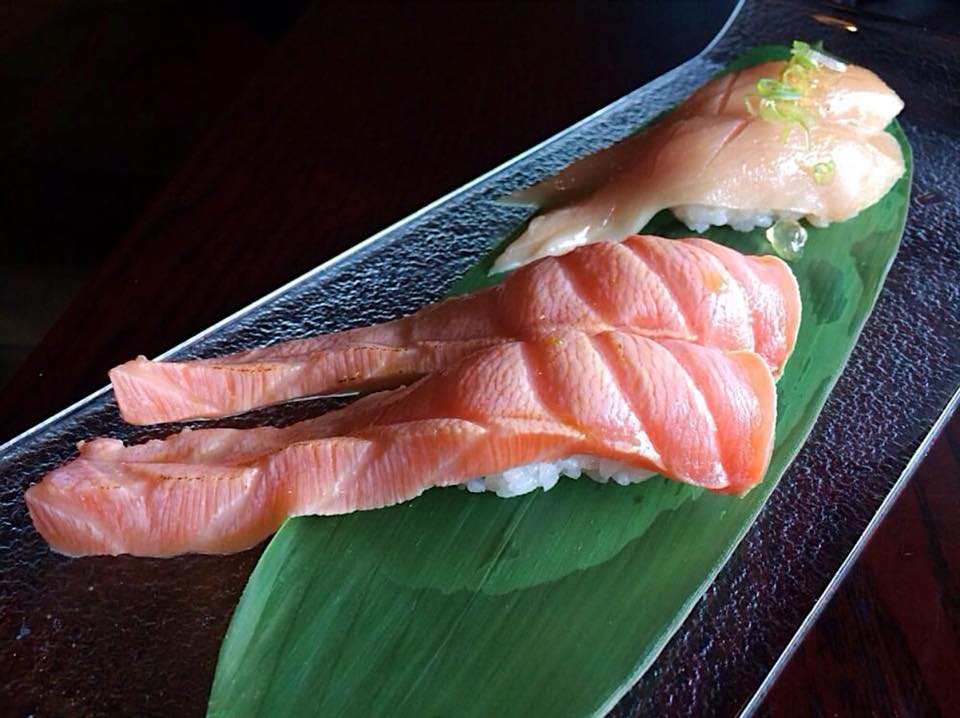
Find the story nobody is telling. If every sushi bar in the area posts the same overhead shot of a nigiri platter, the one that shows the chef torching a piece of salmon belly, or explains where the fish came from that morning, instantly stands apart. Same category, different story.
Own a format. Maybe nobody near you does short videos with the kitchen team, or a weekly “what’s fresh” Story, or a carousel that walks through a dish from prep to plate. Pick one and do it consistently until it becomes yours.
Own an occasion. If the competition is all date-night polish, maybe you become the obvious choice for family dinners in the Outer Richmond, team lunches in SoMa, or post-hike meals in the North Bay. Social media is where you claim that position out loud.
Lean into what only you have. Your family recipe, your chef’s background, your patio, your thirty-year-old neon sign. Competitors can copy a dish or a promotion. They can’t copy your history.
Turn what you learn into next month’s content
Research only matters if it changes what you post. Spend the last fifteen minutes of your monthly hour turning notes into a plan.
Keep a simple log. A single spreadsheet with each competitor, their best post of the month, one thing they did well, one recurring complaint, and one idea for you. Over a few months you’ll see trends that a single scroll never reveals.
Pick two experiments. Choose two ideas inspired by what you saw, adapted to your own food and voice, and test them in the next month. If a format worked for a ramen shop in the East Bay, try your own version and see how your audience responds.
Measure against yourself. Judge your experiments against your own recent posts, not against your competitor’s numbers. Our guide to restaurant social media analytics walks through which numbers matter and which ones to ignore.
Feed it back to the kitchen and the floor. Some of the best insights aren’t about social media at all. If a competitor’s guests keep raving about a lunch special, or complaining about a missing option, that’s worth a conversation with your chef and your manager.
The traps to avoid
Competitor research is a tool, and like any tool it can be misused. A few habits will cost you more than they teach you.
Don’t obsess. Checking a rival’s page every day doesn’t make you smarter; it makes you anxious and reactive. Once a month is plenty. Use the rest of that energy on your own content.
Don’t copy outright. Lifting another restaurant’s captions, photos, or signature concept is the fastest way to look second-rate, and it can sour relationships in a small local industry. Borrow the principle, never the execution.
Don’t snipe. No subtweeting, no passive-aggressive comparisons, no “unlike some places” captions, and never leave comments or reviews on a competitor’s page. Bay Area diners notice, and it always reflects worse on the person throwing the punch.
Don’t chase every trend. Just because the hot new spot is doing a particular TikTok trend doesn’t mean it fits a forty-year-old family Cantonese restaurant. The right question is always “does this fit us?” not “are they doing it?”
Remember they’re also your neighbors. Some of the strongest restaurant communities in the Bay Area, from the Mission to downtown Walnut Creek, are built on owners who share tips, cross-promote, and send overflow guests to each other. Studying the competition and being friendly with them aren’t opposites.
Let us do the homework
Most owners already know they should be watching the competition. The problem is time. Between payroll, inventory, staffing, and the actual cooking, an hour of focused research each month tends to become a few anxious late-night scrolls that don’t lead anywhere.
That’s part of what we do for restaurants across San Francisco and the greater Bay Area: keep an eye on your market, spot what’s working around you, find the gap only you can fill, and turn it into consistent content that brings people through your door instead of the one down the street. If you’d like a team doing that homework for you, get in touch and let’s talk about your restaurant.