

It’s 9:47 on a Tuesday night. The last table just paid, the kitchen is breaking down, and you’re standing by the pass with your thumb scrolling through a camera roll of 400 slightly-blurry photos, trying to find something — anything — worth posting tomorrow. You settle on a dish shot from three weeks ago, type a caption you don’t love, and go home feeling vaguely behind. Then you do it again on Wednesday. And Thursday.
We’ve watched this exact scene play out in restaurants from the Marina to Millbrae, and here’s the thing nobody says out loud: the problem isn’t that you’re lazy, uncreative, or bad at Instagram. The problem is that you’re trying to produce content one lonely, exhausted post at a time. That’s the hardest possible way to do it, and it produces your worst possible work.
The restaurants that post consistently — the ones whose feeds look intentional instead of frantic — are almost never more disciplined than you. They’ve just stopped making the decision daily. They batch. One focused afternoon of shooting, writing, and scheduling buys them a whole month of posts, and the nightly scramble disappears. Here’s exactly how to do it.
The daily scramble is the actual problem
Posting as you go feels productive. It’s the opposite. Every night you’re paying a small tax in decision-making — what to post, what to say, whether the photo’s good enough — at the exact moment of the day when you have the least energy to spend. Decision fatigue is real, and the restaurant owner making their nineteenth judgment call of the shift is not going to make a great one about a caption.
So the content suffers, but that’s only half of it. The deeper cost is inconsistency. You post four times one week because it was slow and you had a burst of motivation, then vanish for nine days when you got busy — and busy is precisely when your restaurant looks most alive and most worth posting. The algorithm reads that silence as a signal to stop showing you to people. Your regulars forget you exist between visits. The whole point of social — staying top of mind in a neighborhood full of options — quietly breaks.
The honest diagnosis. If your feed has stretches of five posts in a week followed by three weeks of nothing, you don’t have a content problem or a creativity problem. You have a production-schedule problem. And production schedules are fixable in an afternoon.
Batching, defined: one shoot, thirty posts
Batching just means grouping the same kind of work and doing it all at once, instead of scattering it across thirty separate nights. You concentrate the thinking into one planning block, the shooting into one session, and the writing and scheduling into one more — and then, for the rest of the month, “posting” becomes nothing more than tapping publish, or letting a scheduler do even that for you.
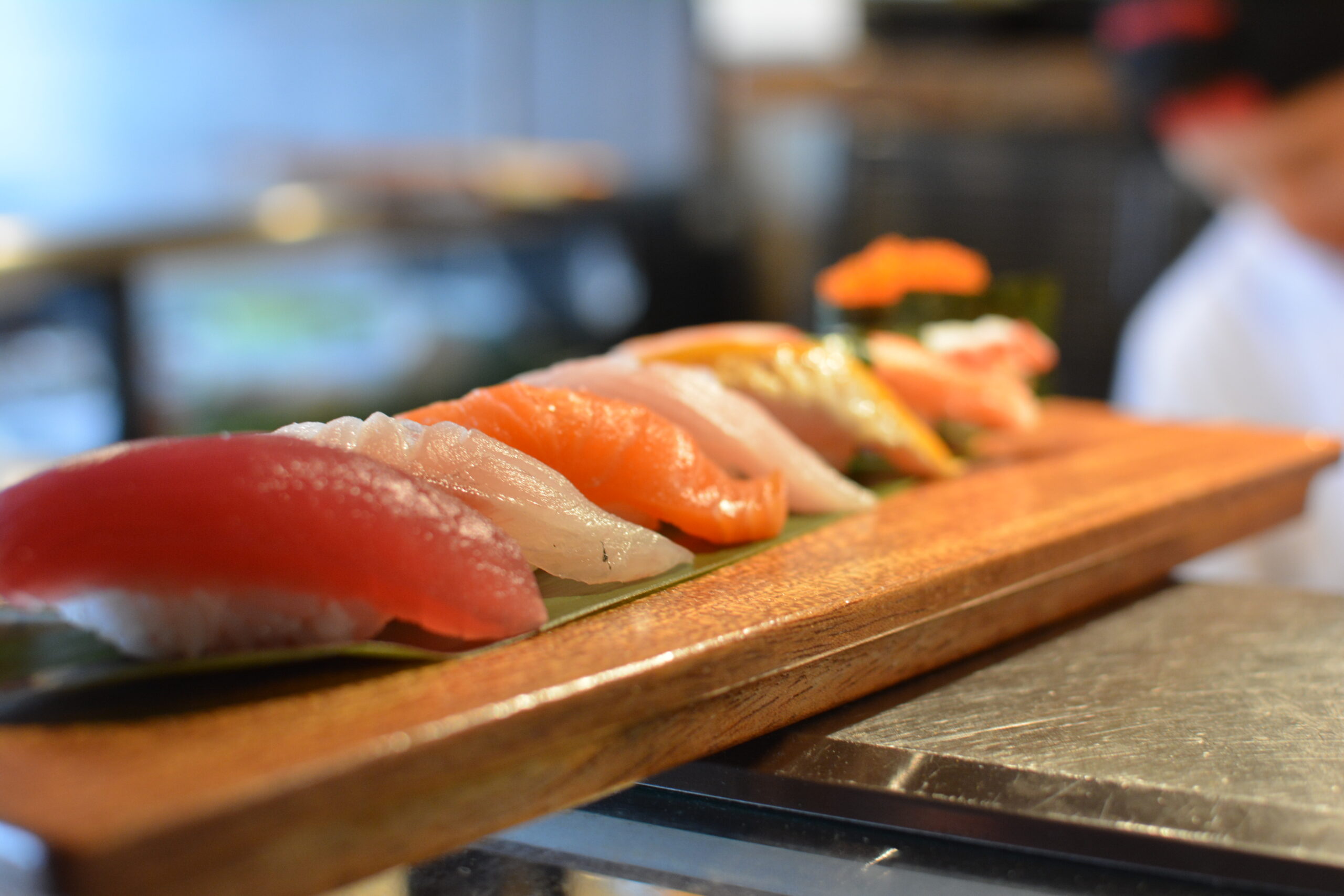
The math is what sells it. A single well-lit dish can become a feed post this week, a Story next week, the cover frame of a Reel, a highlight that lives on your profile, and the creative behind a small ad — five slots from one plate of food. Do that with ten or twelve dishes in a single shoot and you are not scrambling for a month. You’re curating a surplus.
None of this requires a studio, a photographer on retainer, or gear you don’t own. It requires a couple of uninterrupted hours and a plan you make before you pick up the phone. That order — plan first, shoot second — is the entire trick, and it’s where most owners get it backwards.
Start with the shot list, not the camera
The single biggest reason a “let’s shoot some content” afternoon fizzles is that it starts with the camera instead of a list. You plate one dish, take forty photos of it, run out of steam, and end up with forty near-identical shots of the same short rib and nothing else. A shot list prevents that. Before you cook anything, sit down for fifteen minutes and map the month.
Pull the calendar first. What’s actually happening in the next four weeks? A new seasonal dish, a Warriors game night, a Dungeness crab special when the season lands, a slow Monday you want to fill, Restaurant Week on the Peninsula. Your content should have jobs to do, and the calendar tells you what those jobs are before you invent posts nobody needs.
Then count backwards to a number. If you post four times a week, that’s roughly sixteen pieces of content for the month — but you don’t need sixteen separate shoots, because of the multiplication we’ll get to. Realistically you’re shooting eight to twelve things: a few hero dishes, a couple of behind-the-scenes moments, one or two shots of the room or the staff, and a short clip or two for Reels. Write that list down. A shoot with a list finishes. A shoot without one wanders.
Shoot everything in one ninety-minute window
Pick your light before you pick your dishes. The best free lighting in any Bay Area restaurant is the window at the front of the house, and the best time to use it is mid-morning or mid-afternoon before service, when the room is empty and you’re not fighting your own dinner rush for a table. If you’re out in the Sunset or the Outer Richmond and the fog is sitting low, that soft, even, overcast light is a gift — it’s the flattering diffusion photographers pay for. A harsh, sunny Marina afternoon is harder; pull the plate a foot back from the glass and let the light fall, don’t blast it.
Batch the plating like a prep list. Have the kitchen fire your shot-list dishes in a sensible order — cold things and composed plates first, anything with steam or melting ice last — so you’re shooting a steady stream instead of waiting ten minutes between each one. Move fast. Food photographs best in the ninety seconds after it hits the plate, and a batched session respects that instead of letting a hero dish congeal while you fiddle with settings.
Capture video and stills of everything, every time. This is the habit that changes your whole output. For each dish, take your photos and then shoot five to ten seconds of slow video — the pour, the pull-apart, the sauce spooned over, the plate set down. It costs you fifteen extra seconds per dish in the moment and it doubles what you walk away with. Those clips are the raw material for a month of Reels, which are still the single best tool you have for reaching people who’ve never heard of you.
One dish, five posts: the multiplication trick
Here’s where a modest pile of assets turns into a full calendar. Most owners think one dish equals one post, so they feel like they need thirty dishes for thirty posts. You don’t. You need a handful of good captures and a habit of using each one more than once, in more than one place.
Take one strong shot of, say, your black cod. The clean overhead still becomes a feed post on week one. The vertical video of the miso glaze going on becomes a Reel on week two. A behind-the-scenes frame of the same dish being plated goes to Stories with a “prepping tonight” sticker. The best photo gets pinned to a highlight so it lives on your profile permanently. And when you’re ready to put twenty dollars behind something, that already-proven post becomes the ad. One dish, five slots, and not one of them feels repetitive to the person seeing it, because they live in different places and land on different days.
Do that across your shot list and the panic of the blank calendar just evaporates. The question stops being “what do I post tomorrow” and becomes “which of these thirty good options goes in which slot” — a scheduling decision, made once, in daylight, with coffee.
Write the captions in one sitting too
The writing is the part everyone forgets to batch, and it’s the part that quietly eats the most time when you do it nightly. Staring at a blank caption box at 10pm is its own special misery. So don’t. Once your photos are edited and dropped into a folder, sit down with all of them at once and write every caption in one pass. It’s faster, because you’re in the rhythm of it, and it’s more consistent, because the voice doesn’t lurch from formal on Monday to goofy on Thursday depending on your mood.
Keep the structure simple and human. A good restaurant caption usually does one small thing: tells a diner what they’re looking at and gives them a reason to come get it. A line about the dish, a detail only an insider would know, a nudge toward booking or walking in. You do not need a paragraph, and you do not need seven lines of hashtags — a few relevant ones anchored to your neighborhood do more than thirty generic ones. Writing fifteen of these in a row, you’ll find a rhythm that actually sounds like your restaurant, which is worth more than any individual clever line.
Queue it, leave gaps, and walk away
The last step is what makes the whole system pay off: load the month into a scheduler and stop touching it. Meta Business Suite does this for free across Instagram and Facebook; tools like Later or Buffer do it with a nicer calendar view if you want one. Drop your posts onto the dates, set the times, and the nightly job you used to dread now happens without you in the room. This is the moment the afternoon of work converts into three weeks of reclaimed evenings.
Leave deliberate holes in the schedule. Batching is not the same as going on autopilot, and the restaurants that get this wrong end up feeling like a vending machine. Leave a few slots open every week for the real-time stuff a scheduler can never plan — the special that sold out by 7, the line down the block in Hayes Valley, the regular’s birthday, the fog rolling in over a full patio. Your queued content keeps you consistent; your reactive content keeps you human. You want both, and batching the first is what frees you up to actually enjoy the second.
What a batched month actually buys you. Not just tidier logistics — better results. You post more consistently, so the algorithm and your regulars both keep you in view. The content is stronger because it was made with light and intention instead of desperation. And you get your nights back, which is the part that matters most, because the reason you opened a restaurant was never to stand by the pass at 9:47 hunting for a photo of last month’s short rib.
When you’d rather just hand it off
Batching works, and plenty of Bay Area owners run this system themselves with nothing more than a phone and a free afternoon. But an afternoon is exactly the thing a lot of you don’t have, and there’s no shame in deciding your two free hours are worth more spent on the floor, on the food, or at home. That’s the whole reason we exist: we shoot, write, and schedule a month of content for restaurants from SoMa to San Mateo, so a consistent, good-looking feed just happens in the background while you run the place. If the nightly scramble sounds a little too familiar, get in touch and we’ll take it off your plate — batch and all.