

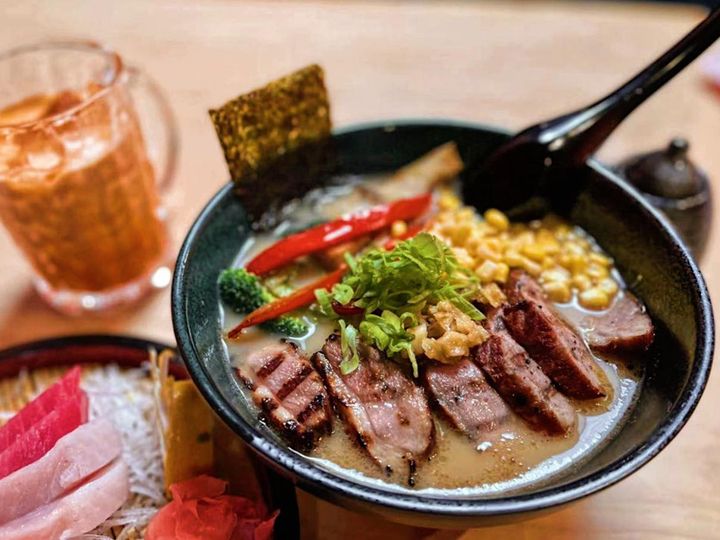
It’s 6:47 on a Thursday in the Mission. A diner is standing on Valencia Street, hungry, scrolling Instagram, three Reels deep into the algorithm’s late-dinner spiral. They see your spicy garlic noodles. They stop. They tap your profile. They tap the link in your bio. And then — what happens in the next three seconds decides whether your phone rings for a six-top, or whether they wander down the block to the place with a clearer menu and a working reservation button.
That tap — that single tap on your link in bio — is the most undervalued square inch on the Bay Area restaurant internet. It’s the only clickable surface Instagram and TikTok give you. Every Reel you film, every Story you post, every influencer collab you pay for, every dollar of paid social — it all funnels into this one link. And for most of the restaurants we audit between San Mateo and the North Bay, that link is doing absolutely nothing to convert the attention you worked so hard to earn.
This is the playbook we run with our restaurants. It’s opinionated, it’s short, and it has one job: turn the next person who taps your link in bio into a reservation tonight.
The link in bio is not a billboard — it’s a checkout counter
Most restaurants treat their link in bio like a homepage. They send it to their website’s front door — a hero carousel, an “About Us” paragraph, a stock photo of a chef plating something the menu doesn’t actually serve, and three scrolls of fluff before the diner finds anything useful. By the time the menu loads, the diner is already on Yelp comparing you to the spot two doors down in Hayes Valley that has clear photos, a tap-to-call button, and an OpenTable link above the fold.
A link in bio is not a billboard. It’s not a brand statement. It’s not a place to “share more about our story.” It’s a checkout counter. The diner has already decided they’re interested — that’s why they tapped. The only question they’re answering on the next screen is whether the friction of booking with you is lower than the friction of booking somewhere else. Bay Area diners, in particular, are decision-fast and patience-short — they’re on Muni, they’re walking up Polk Street with friends, they’re in the back of a Lyft from SoMa to the Marina. They will not wait for your site to load.
The one rule: every link earns its slot by booking a table
Audit your current link in bio with this single question. For every link on the page, ask: does this directly increase the chance a diner books, walks in, or orders in the next thirty minutes? If the answer is no, the link doesn’t belong. That sounds extreme — it’s meant to. The mistake every restaurant makes is treating the link in bio like a sitemap. “We have a press page, a careers page, a catering inquiry form, a sustainability commitment, a wine club, a newsletter signup, our Yelp page, our Tripadvisor page…” Cool. None of that gets a Bay Area diner sitting at your bar tonight.
We tell every restaurant we work with — from a tiny pasta spot in the Inner Sunset to a multi-location dim sum group on the Peninsula — that five links is the cap. Anything more and the diner skims, decides nothing is urgent, and bounces. Five clear, intentional links, in the right order, will out-convert a Linktree page with seventeen buttons every single time. We’ve A/B tested it on real restaurants. It is not close.
What 80% of Bay Area restaurants are doing wrong right now
Walk down 24th Street, Clement Street, or West Portal and audit the Instagram bios. You’ll see the same three failure modes repeat. The first: the link in bio points straight to the homepage of a Wix or WordPress site built three years ago, where the menu is a PDF that opens in a separate tab and the reservation button is at the bottom of the page, after the “Our Story” section and a Google Maps embed. The diner has already swiped back to the algorithm before they ever saw a dish.
The second: the link points to a Linktree with twelve buttons that all look identical. “Menu,” “Order Online,” “Catering,” “Reservations,” “Gift Cards,” “Yelp,” “Google Reviews,” “Our Instagram” (yes, a link back to the Instagram you’re already on), “Apply to Work With Us,” “Press,” “Mailing List,” “Contact.” The diner scans, finds nothing visually distinct, and treats the whole page like a parking-lot directory. Decision fatigue. Bounce.
The third — and this is the most painful one because it’s the most fixable — the link points to a great landing page, but the page hasn’t been touched since the day it was set up. The Reel everyone is watching this week is for the smash burger you started running on Tuesdays. The link in bio still says “Try our new fall pumpkin gnocchi.” The diner came for what they saw, and you handed them last season’s menu. That’s a closed deal you traded for nothing.
Linktree, Beacons, or a custom landing page — what actually converts
The tool matters less than the structure, but the tool does matter. Linktree is fine when you’re starting out and have no developer. It loads fast, it’s mobile-first, and you can update it from your phone before service. Beacons gives you a little more visual control — full-bleed background images, button styling, a richer “mini-site” feel — and for restaurants with strong photography, that visual polish is worth the small monthly fee. Both are perfectly acceptable. Neither is the best answer.
The best answer is a single custom page on your own website — something like yourrestaurant.com/order or yourrestaurant.com/now — that you control end to end. Why? Three reasons. You own the data, so you can drop in tracking and actually see which buttons get tapped from Instagram versus TikTok versus your Google Business Profile. You can match the page exactly to what’s currently on your feed — same hero photo, same dish, same offer — which is the single biggest conversion lift we’ve ever measured. And you can build it once and update the “current Reel” section in thirty seconds before a Friday push, with no third-party logo on the page slowing the diner’s trust.
If you’re a single-location Outer Richmond ramen shop and you don’t have a developer, use Linktree or Beacons and don’t apologize for it. If you’re a North Bay group with two locations and a marketing budget, a custom landing page will pay for itself in a month of corrected reservations alone.
The five links every Bay Area restaurant should have — in this exact order
Order matters more than people think. Mobile eyes scan top-down, decide in under two seconds, and tap the first thing that looks like the answer to “how do I eat here tonight.” That means the top of your link-in-bio page is the most valuable real estate you own. Don’t waste it on a logo or a welcome message — the diner already knows where they are.
Link one — Book a Table Tonight, deep-linked to OpenTable, Resy, Tock, or your direct reservation system with tonight’s date pre-filled. Not “Reservations.” Tonight. The diner is hungry now, not next Tuesday. Link two — the dish you’re currently posting about. If your last three Reels were the spicy mapo, the link should be Order the Spicy Mapo, going straight to that item on your DoorDash, Toast, or in-house ordering page. Match the link to the content. This is the single biggest conversion delta we measure on Bay Area accounts. Link three — your full menu, as a fast-loading web page (not a PDF — never a PDF on mobile, please). Link four — Call Us, as a tel: link that opens the dialer. Older diners and parties of six call. Honor that. Link five — directions, deep-linked to Apple Maps and Google Maps from a single button (Beacons and Linktree both support this).
That’s five. No newsletter. No press page. No “follow us on TikTok.” No “read our blog.” If you must include something else, put it below the fold, where only the deeply curious will scroll. Everything in the first screen has to be a buying decision.
The 6:47 p.m. test — three questions every hungry diner is asking
Open your link in bio on your phone right now and answer three questions in the next ten seconds. One — can I book or order in two taps? Two — do I see the dish that made me tap, the way it looked in the Reel? Three — do I know exactly where you are and how to get there? If any answer is no, you’re leaking diners. We run this test on every account we onboard, and roughly nine in ten fail at least one of the three. The fixes are usually under an hour of work and worth more than a month of paid ads.
The 6:47 test has a Bay Area-specific wrinkle worth calling out. Diners here are unusually likely to be deciding while in transit — on BART between Embarcadero and 19th, on the 38 Geary heading toward Outer Richmond, on the bridge from the East Bay. That means slow page loads, autoplay video, or anything that requires good connectivity will kill your conversion. Every link in bio we build is tested on 4G with the cache disabled. If it doesn’t feel instant, it isn’t finished.
The monthly refresh — keep the link in sync with what you’re posting
The link in bio is the only piece of your marketing that has to move every week. Your menu evolves. Your Reels rotate. Your specials change with what’s at the Ferry Building farmer’s market on Saturday morning. If your link in bio is static, it’s drifting further from what’s on your feed every single day. The fix is operational, not creative: put a fifteen-minute slot on your Monday calendar to update the “featured dish” button on your link in bio to match whatever you’re running that week.
For seasonal pushes, the link in bio is also where you put your time-sensitive offers. Father’s Day brunch in late June, the SF Pride rooftop menu, Lunar New Year banquets, restaurant week — every one of these is a moment when the link in bio should change for ten days and then change back. Bay Area diners book peaks like these earlier than the rest of the country, and a link in bio that says “book Father’s Day brunch” two weeks out will fill the seating chart faster than any other surface you have. Then take it down on June 22 and pretend it never happened.
The one metric to watch — and the report you should run every Friday
If you’re using a custom landing page, you have analytics — use them. Pull a weekly report on Friday afternoon that shows two numbers: link-in-bio page views (how many people tapped from your profile) and link-in-bio clicks (how many of them tapped one of your five buttons). The ratio between those two numbers is your link-in-bio conversion rate. A healthy Bay Area restaurant runs between 35 and 55 percent. Below 30 means the page isn’t answering the diner’s question. Above 60 and you’re probably under-promoting the page — meaning your Reels need clearer calls to action telling people to tap the link.
If you’re on Linktree or Beacons, both platforms give you click data per button. Look at the order. If the top button isn’t the most-clicked button, reorder. If a button gets less than 5 percent of clicks for two weeks running, kill it — that link is taking attention away from the ones that work. The link in bio is a living surface, and like every living surface in marketing, the restaurants that win are the ones that touch it weekly.
The link in bio is not glamorous work. It will never be the part of your marketing that people compliment you on. But it’s the bottleneck that decides whether the Reels, the Stories, the influencer features, and the dollars you’re spending on social actually turn into a full dining room on a Tuesday in the Marina or a packed bar on a Saturday in the Castro. Get this one square inch right and everything upstream starts working harder. Leave it broken and you’re paying for attention you can’t convert.
If you want a second set of eyes on your current link in bio — what it should say, how it should be ordered, and which one or two changes will move the needle this week — that’s exactly the kind of thing we do for the Bay Area restaurants we work with. Get in touch here and we’ll send back the three highest-leverage fixes we’d make before next Friday’s dinner service.