

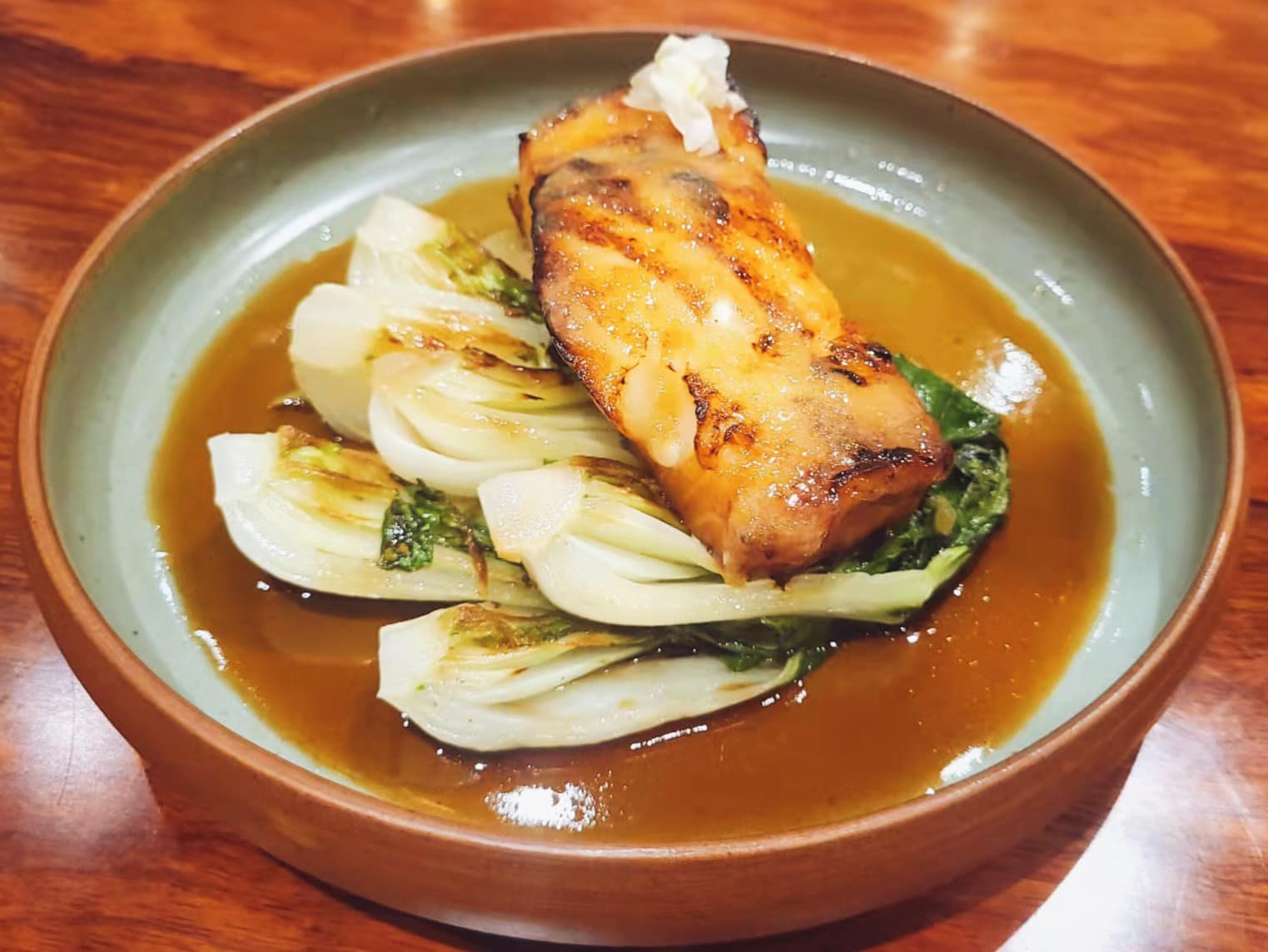
There’s a moment that happens in nearly every Bay Area restaurant. A post does unusually well — maybe the sea bass, maybe a slow-Tuesday special — and Instagram pops up a little blue button offering to show it to more people for twenty dollars. You tap it. You feel like you did marketing. Three days later you’ve got 2,400 extra views, nineteen likes from accounts in three different states, and not one additional cover on the books.
That isn’t advertising. That’s a donation.
Paid social works for restaurants. We’ve watched a few hundred dollars a month reliably move covers for our clients from the Marina to Millbrae. But it works for reasons that have almost nothing to do with the boost button, and the gap between “boosting posts” and “running ads” is the difference between throwing money at the algorithm and asking it for something specific. Here’s how we’d spend your first real ad budget in 2026 — and, just as importantly, when we’d tell you not to spend it at all.
The boost button is a slot machine, not a strategy
Here’s the part nobody explains when you hit Boost. Meta asks what you want, you’re given a short list of vague options, and by default the system optimizes for engagement — likes, comments, the cheapest possible reaction. It is extremely good at this. It will find you the people most likely to double-tap a photo of duck and least likely to ever drive to Clement Street.
Ads Manager, the free tool sitting one click away that almost no owner opens, lets you ask for something else entirely. A website visit. A click on your reservation link. A phone call. A tap on “Get Directions.” Same platform, same dollars, same photo — completely different instruction, and therefore a completely different audience delivered to you.
The practical translation. If you’ve been boosting for a year and wondering why the numbers look great and the dining room doesn’t, this is why. You’ve been buying applause. Stop boosting, open Ads Manager, and the first decision you’ll make — the campaign objective — is worth more than every other decision combined.
You only need two campaigns. Genuinely, two.
Restaurant ad accounts get complicated fast, and complexity is where budgets go to die. A single-location restaurant spending a few hundred dollars a month should be running exactly two things.
Campaign one — the neighborhood knows you exist. A tight-radius awareness or traffic campaign pointed at people who live and work near you. Its entire job is to make your restaurant feel familiar to the person who walks past your door four times a week and has never once looked up. Familiarity is the whole product here. Nobody books a place they’ve never heard of on a Thursday whim, but they’ll absolutely book the place they’ve seen three times on their phone.
Campaign two — the warm crowd converts. A retargeting campaign aimed only at people who have already interacted with you: watched a Reel most of the way through, visited your profile, tapped your website, opened your menu. These people are pre-sold. This campaign asks for the reservation.
That’s the architecture. Cold audience gets shown food. Warm audience gets shown a reason to book. If you find yourself building a fifth ad set at midnight, you’ve left the plot.
Your creative is roughly 80% of the result
Owners obsess over targeting and treat the photo as an afterthought. It’s backwards. Meta’s targeting is now so aggressive at finding lookalike behavior that the single biggest lever left in your hands is what the ad actually looks like — and a mediocre photo behind perfect targeting will lose to a great photo behind sloppy targeting every single time.
Use the food that already won. Don’t shoot something new for the ad. Go into your Instagram insights, find the three posts from the last six months with the highest saves and shares — saves, not likes — and run those. They’ve already been A/B tested by an audience that resembles the one you’re about to buy. The dish that made 400 people quietly bookmark you is the dish that will make a stranger stop scrolling.
Video beats stills, but barely, and only if it’s good. A six-second clip of cheese pulling, sauce ladling, or a crab getting cracked open will generally outperform a static plate. A shaky pan across an empty dining room will not. If the only video you have is bad video, run the photo.
Say where you are, on the creative itself. A stunning bowl of noodles with no location is a stunning bowl of noodles anywhere on Earth. “Inner Sunset” or “two blocks off Castro Street in Mountain View” in the first line of copy does more for a local restaurant than any headline formula. People scroll fast. Geography is the hook.
Radius beats demographics, almost always
The temptation with a new ad account is to get clever — foodies, ages 28 to 45, interested in fine dining, Michelin, wine. Resist it. For a restaurant, the strongest targeting signal on Earth is simply can this person get to you without resenting it.
Start with a radius that respects Bay Area traffic. In dense, walkable neighborhoods — the Mission, North Beach, SoMa, downtown Palo Alto — one to three miles is often plenty, because nobody in San Francisco is crossing town on a weeknight for a place they’ve never tried. In the suburbs and the North Bay, where people drive anyway, five to ten miles is more realistic. A restaurant in San Carlos can pull from Belmont and Redwood City without anyone blinking. A restaurant in the Outer Richmond generally cannot pull from Oakland.
Add the workday layer. This is the one piece of targeting cleverness worth doing. If you’re in the Financial District, SoMa, or near a big Peninsula campus, target the radius around your restaurant during weekday lunch hours specifically. The people in that zone at noon aren’t the people who live there — and lunch is the daypart most Bay Area restaurants are quietly under-selling.
Beyond that, leave the interest boxes empty. Let the algorithm do the one thing it’s genuinely excellent at. Your job is to hand it a small geographic box and a beautiful photo.
What a few hundred dollars a month actually buys
Let’s be concrete, with the honest caveat that costs swing hard by neighborhood, season, and how good your creative is. In our experience running local restaurant campaigns around the Bay, you’re typically looking at somewhere in the range of ten to twenty dollars to reach a thousand people — the Bay Area sits at the expensive end of the national scale, because everyone from tech recruiters to political campaigns is bidding for the same eyeballs.
So $300 a month is roughly 15,000 to 30,000 impressions. That sounds small until you frame it correctly: it isn’t 20,000 strangers, it’s a few thousand people near you seeing you several times. Frequency inside a tight radius is the entire mechanism. You are not buying reach. You are buying repetition in a two-mile box.
Don’t split it thin. Three hundred dollars across one campaign works. Three hundred dollars across five campaigns, four audiences, and eight creatives works for nobody — every ad set stays stuck in the learning phase, and Meta never gathers enough signal to optimize anything. If your budget is small, your structure must be small.
And give it a month before you judge it. Restaurant ads are a familiarity business, not a direct-response business. The person who saw your short rib on a Tuesday and walked in on a Saturday two weeks later will never, ever show up in your ad dashboard as a conversion. Which brings us to the uncomfortable part.
Retargeting is where restaurants leave the most money
Most restaurant ad accounts we audit have one campaign, pointed at cold traffic, and nothing else. That’s like a host who greets every stranger on the sidewalk and ignores the people already standing in the doorway.
Build the warm audience first, because it costs nothing. Inside Ads Manager you can build custom audiences from people who engaged with your Instagram or Facebook page in the last 90 or 365 days. That audience already exists. It’s sitting there. It’s built from every person who has ever watched one of your Reels, saved a photo, or clicked through to your site — and it is by an enormous margin the most valuable group of people you have access to.
Show them something different than you show strangers. Cold traffic gets the gorgeous hero dish. Warm traffic gets the ask — the weekend prix fixe, the new happy hour, the reservation link, the “we have five tables left Friday” nudge. Same restaurant, entirely different conversation, because these people already know who you are.
A retargeting audience for a single Bay Area restaurant is usually small — a few thousand people, sometimes less. That’s fine. It’s also cheap to reach, and it converts at a rate cold traffic simply cannot touch. Fifty dollars a month spent here regularly outperforms two hundred spent on strangers.
How to tell if it’s working (and when to kill it)
Restaurant ad attribution is genuinely, structurally messy. Someone sees your ad on the couch and walks in nine days later with a friend. No pixel on Earth catches that. So you need a scorecard that mixes what the platform tells you with what your own four walls tell you.
Watch cost per landing page view, not cost per click. Clicks include accidental taps and people who bounced before your site loaded. A landing page view means the person actually arrived. If you’re paying more than roughly a dollar or so for one in a local campaign, the problem is almost always the creative, not the targeting.
Watch the Google Business Profile numbers in parallel. This is the trick most owners miss. When social ads are working, direction requests and calls on your Google listing climb too — because people who see the ad go search your name. If your ads are running and your GBP activity is flat, the ads aren’t landing.
And then just ask people. Train the host to ask “how’d you hear about us?” for two weeks. It is unscientific, unfashionable, and more informative than any dashboard you will ever look at.
When we tell restaurants not to run ads at all
This is the section that costs us money to write, so read it carefully. Ads are an amplifier. They make whatever you already are louder — and if what you already are is unconvincing, all you’ve bought is a faster route to being rejected.
If your Google reviews sit at 3.7, fix that first. Every single person who sees your ad and gets interested will search your name before they book. They will find the reviews. A three-hundred-dollar ad budget pointed at a 3.7 is three hundred dollars spent driving people toward a reason to eat somewhere else.
If your Instagram grid is nine months stale, fix that first. They’ll tap your profile. An abandoned page reads as an abandoned restaurant, and you’ve just paid to show a stranger that you gave up.
And if there’s nowhere to book, fix that first. If the ad’s destination is a website with no visible reservation link, no phone number above the fold, and a PDF menu from 2023, the money is already gone. Ads are the last thing you turn on, not the first.
Get those three right, and a modest, boring, well-structured ad budget becomes one of the most reliable levers a Bay Area restaurant has. Get them wrong, and the boost button is just a slower way to lose money than the ads manager.
If you’d rather not spend your Sunday night inside Ads Manager arguing with a radius slider, that’s what we’re here for. Metaroots runs social media and paid campaigns for restaurants across San Francisco, the Peninsula, and the East Bay — we shoot the food, write the copy, build the audiences, and tell you honestly when the money is better spent elsewhere. Get in touch and we’ll take a look at what you’re working with.