

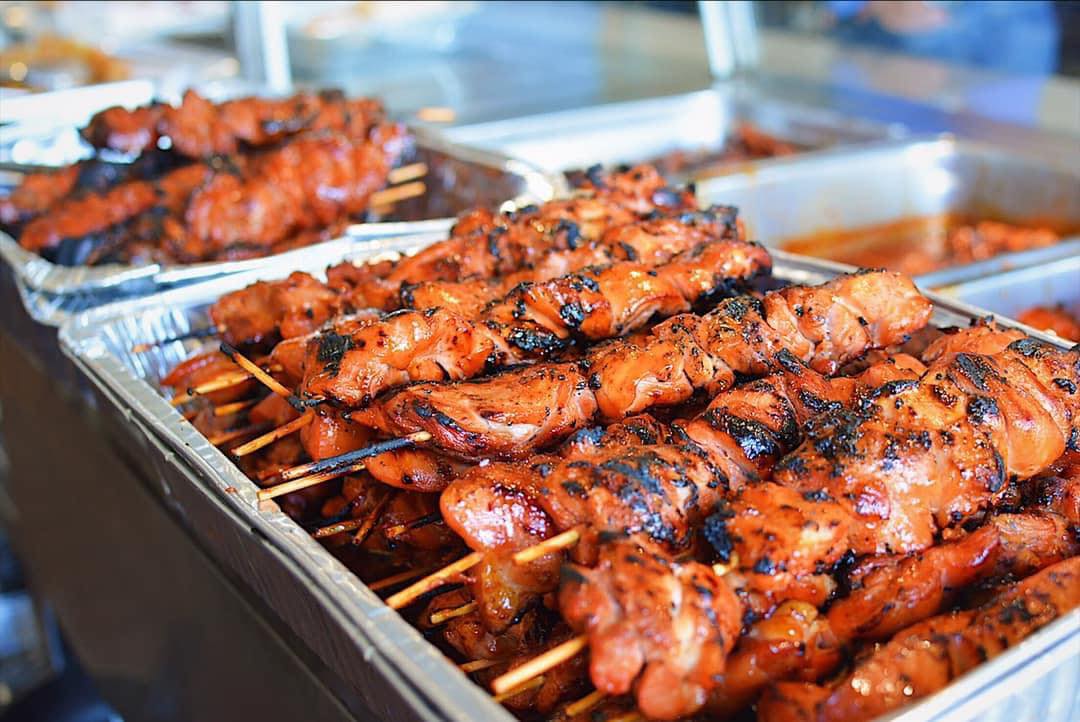
There is a message sitting in your Instagram inbox right now that says something like “Hi! Do you do catering for around 40 people?” and nobody has answered it in nine days. We see this on almost every account we take over. The restaurant is posting five times a week, running Reels, replying to reviews, doing everything right on the dining room side — and quietly leaking the single most profitable line of business it has. Catering and private events are where Bay Area restaurants make real margin, and they are almost always the least marketed thing on the menu.
This is the playbook we run for clients who want to turn catering from a happy accident into a predictable revenue line. It is not complicated. It is mostly about being findable, being specific, and answering people faster than the restaurant down the street.
Why catering is the best margin you are not chasing
A table of four on a Tuesday in the Inner Sunset is worth maybe a hundred and twenty dollars, and it costs you a server, a host, a table, and a two-hour window. A catering order for the same food is eight hundred dollars, arrives as one ticket, gets prepped in a block during your slow hours, and needs zero front-of-house labor. The kitchen is already staffed. The rent is already paid. Nearly everything above your food cost drops straight to the bottom line.
The scheduling advantage is the part people miss. Catering orders come with lead time. You know on Monday what you are cooking on Thursday, which means you order tighter, waste less, and give your prep cooks work during the dead 2pm to 4pm stretch instead of sending them home early. For a restaurant in SoMa or the Financial District that dies after the lunch rush, corporate catering is the difference between a payroll problem and a payroll solution.
And it compounds in a way dine-in does not. One office manager in Mission Bay who has a good experience will order every month for two years, then tell three other office managers. An admin who found a reliable caterer for forty people will defend that relationship, because finding you solved a recurring headache in their job.
Decide what you actually sell before you market it
The number one reason catering inquiries die is that the restaurant does not have an answer ready. Someone asks “what does catering for 50 look like?” and the owner has to think about it, do math on a napkin, and get back to them tomorrow. By tomorrow they have booked someone else. Build three packages, price them, and never improvise again.
Start with a per-person number, not a per-tray number. “Twenty-eight dollars a head, minimum twenty people, includes two proteins, one vegetable, rice, and utensils” is a sentence a corporate buyer can forward to their finance person in one message. “Large tray of orange chicken, ninety-five dollars” makes them do arithmetic they do not want to do, and it makes you look like a takeout counter rather than a caterer.
Build one package that is deliberately small. A fifteen-person option catches the birthday parties, the team offsites, the baby showers in the Outer Richmond that would otherwise never call you. It is not where your money is, but it is where your future two-hundred-person client discovers that you are competent. Treat it as paid marketing that happens to be profitable.
Write down what you will not do. If you do not deliver past San Bruno, if you need seventy-two hours notice, if you cannot do a full setup with chafing dishes and staff, say all of that publicly. Restaurants think stating limits costs them business. It does the opposite: it kills the inquiries that were going to waste an hour and end in a no, and it makes the buyers who do fit trust you more.
Your catering page does more work than your Instagram
Here is the uncomfortable truth about catering demand: most of it starts in Google, not on social. An office manager on the Peninsula types “catering Palo Alto 50 people” or “Chinese food catering near Redwood City” and picks from what comes back. If you do not have a dedicated catering page on your site, you are not in that consideration set at all, no matter how good your Reels are.
One page, one job. It should carry the word “catering” in the page title, the URL, and the first heading, and it should name the cities you actually serve. Not “the Bay Area” — the specific list: San Mateo, Burlingame, Millbrae, South San Francisco. Google is matching a location-plus-service query, and vague geography loses to specific geography every single time.
Put the packages and prices on the page. Every restaurant owner resists this and every one of them is wrong. Hiding pricing behind “contact us for a quote” does not protect your margin, it just filters out the seventy percent of buyers who were not going to email a stranger to find out if you were in their budget. Publish the numbers, note that large or custom events are quoted separately, and let the qualified people self-select.
Then make the ask absurdly easy. A short form with name, date, headcount, and delivery zip. A phone number a human answers. A direct email that is not info@ going into a black hole. Cutting a nine-field form to four and adding a tappable phone link at the top routinely doubles inquiries on its own.
The social content that actually books events
Your regular food content sells dinner. Catering content has to sell scale, reliability, and the feeling of a decision going well. Those are different pictures.
Shoot volume, not plating. The hero shot for catering is not one beautifully composed bowl. It is six hotel pans of skewers lined up under the pass, steam coming off them, foil trays stacked three deep. That image answers the only question the buyer actually has, which is “can these people handle my sixty-person thing without embarrassing me.” Elegance sells a date night. Abundance sells an event.
Show the delivery, not just the food. A ten-second clip of your team loading the van, walking trays into a lobby in Mission Bay, and setting up a clean spread on a conference room table is worth ten polished dish photos. It shows the logistics working. That is the anxiety you are selling against, and nothing kills it faster than footage of the boring parts going smoothly.
Post the receipts from real events. “Sixty people at a startup off Second Street on Thursday” with a photo of the spread does more than any graphic that says CATERING AVAILABLE in a script font. Get permission, keep the company name out of it if you need to, and post it. Every one of those posts is a proof point sitting in your grid when a stranger checks whether you are legitimate.
Pin it and link it. A pinned catering post at the top of your Instagram profile, a Story Highlight called Catering with your packages in it, and your catering page as the first item in your link in bio. Someone who lands on your profile with an event in mind should not have to scroll to find out you do this.
Corporate catering is a completely different sale
There are two catering customers and they want opposite things. The family booking a graduation lunch in the Excelsior is buying an occasion. The office manager at a Series B company in SoMa is buying the absence of a problem. Talk to them the same way and you will lose both.
Corporate buyers care about certainty above all. Will it arrive at 11:45 and not 12:20. Will there be labeled vegetarian and gluten-free options because Priya in engineering will ask. Will there be serving utensils, napkins, and plates so nobody has to run to the store. Can they get an invoice with a PO number instead of paying with a personal card. Answer those five things on your catering page and you will beat restaurants with better food.
The recurring order is the whole game. Most Bay Area tech and biotech offices feed people on a schedule — every Wednesday, every other Thursday, first Monday of the month. Getting into that rotation once is worth more than thirty one-off parties. So after a successful first order, the follow-up is not “thanks, hope to see you again.” It is “we can hold your Wednesdays. Want me to put you down for the next four?”
LinkedIn is underrated here and almost nobody uses it. Office managers, executive assistants, and people ops leads live there. A short post from the owner’s account showing a spread you delivered to a company in Palo Alto, with a line about your corporate packages, reaches exactly the humans who book this and competes with almost nothing.
Private dining and buyouts: sell the room, not the menu
If you have a back room, a mezzanine, a patio, or the ability to close on a Monday, you have a private events business you are probably not advertising. And the mistake almost everyone makes is marketing it with food photos.
People booking a room are buying the room. Photograph it empty and well lit, then photograph it set for twenty-five with glassware down and candles going. Post both. Say how many it seats standing and how many seated, whether there is a screen or an AV hookup, whether you can do a bar package, and what the food and beverage minimum is. Those are the questions in every single inquiry email, and putting the answers in public saves you a dozen back-and-forths a month.
Price the minimum, not the meal. “Semi-private room, up to 30 guests, $2,000 food and beverage minimum Sunday through Thursday” is how event planners think and how they compare venues. Give them a number they can slot into a spreadsheet.
Then go get the calendar. Holiday party inquiries in the Bay Area start in September and are largely done by early November. Rehearsal dinners book four to six months out. If your first private-dining post of the year goes up on December 1st, you missed the entire season. Start pitching your December room in early September and you will be booked while your neighbors are still designing a flyer.
Response speed is the whole competitive advantage
We have run enough of these to say it plainly: the restaurant that replies first usually wins, and it is often not the best restaurant. Someone planning an event is sending the same message to four places on their lunch break. The first credible answer with a real number gets the mental checkmark, and everyone who replies on Thursday is competing against a decision that was already made on Tuesday.
Set a two-hour standard during business hours. Not a perfect answer, just an answer. “Yes, we can do 50 on the 14th. Our corporate package is $28 a head, here’s what’s included, want me to hold the date?” takes ninety seconds to send and takes you from one of four options to the frontrunner.
Consolidate where the inquiries land. Catering leads arrive by Instagram DM, Facebook message, the website form, Google Business Profile messages, and the phone, and in most restaurants those five channels are checked by four different people with no shared system. Pick one inbox, route everything into it, and make one person responsible for it. This single change recovers more revenue than any content strategy we could write for you.
And follow up twice. Once the day after the quote, once a week later. Most owners send one message, hear nothing, and assume it was a no. Usually it was a person who got pulled into a meeting. A short “still happy to hold the 14th for you” note closes a startling number of events that were already halfway yours.
Start with the fifteen minutes that pay for themselves
You do not need a whole new marketing plan to fix this. Go open your Instagram DMs, your Facebook inbox, and your Google Business Profile messages, and answer every catering inquiry from the last sixty days, even the old ones. Apologize for the delay, give them your package and price, and ask about their next event. We do this on nearly every new account and it almost always finds money that was already there.
Then build the three packages, put them on a real catering page with the cities you serve, pin one post, and set the two-hour reply standard. That is the entire program. Restaurants from the Marina to Millbrae are sitting on a catering business that only needs to be made visible and answerable.
If you would rather not build and run all of that yourself, that is what we do. Metaroots handles social media, content, and local search for Bay Area restaurants, including the catering and private events side that usually gets neglected. Get in touch and we will take a look at what your current inquiry flow is actually costing you.