

Ask a Bay Area restaurant owner how delivery is going and you’ll usually get some version of the same shrug: “It’s fine. They take too much.” Then the conversation moves on. Which is strange, because for a lot of restaurants in the Mission, SoMa, and along El Camino, the delivery apps are quietly the second-largest revenue line in the building — and almost nobody manages them the way they manage the dining room.
Here’s the thing that gets missed. Your DoorDash and Uber Eats listings are not a menu you uploaded once in 2021. They’re a storefront. They have a window display, a sign, an entrance, and a host stand, and right now most of them look like a printout taped to a door. That’s not a commission problem. That’s a merchandising problem, and unlike the commission rate, it’s entirely yours to fix.
This is the playbook for treating those listings like real estate you own, getting more out of every order that comes through them, and — the part almost nobody does — slowly converting app customers into people who order from you directly.
Your Listing Is a Storefront, Not a Menu Dump
Open DoorDash right now and search your own category in your own neighborhood. Don’t look at your restaurant. Look at the grid. You’re seeing eight to twelve competitors as a wall of thumbnails, and a customer is going to pick one of them in roughly four seconds based almost entirely on a photo, a name, a star rating, and a delivery time.
That’s the whole game. Not your food. Not your twenty years in business. A thumbnail, a number, and a wait time. If you’ve ever wondered why the newer place two blocks over in the Inner Sunset is out-ordering you despite worse food, that’s usually the answer — they won the four seconds and you didn’t.
Once you see the listing as a storefront, the work becomes obvious. The hero image is your window. The item photos are your display case. The menu order is your host walking someone to a table. The description copy is your server saying “the garlic noodles are what we’re known for.” Every one of those is a lever, every one is free, and most restaurants have never touched a single one after setup.
The Photo Problem Costs You More Than Commission Does
Both DoorDash and Uber Eats have said for years that menu items with photos sell better than items without them. Every operator nods along. Then you open their listing and find eleven items with pictures out of sixty-four, and four of those pictures were taken under a heat lamp on a phone with a cracked screen.
Think about where that leaves you. Better photography compounds on every order, forever, for the cost of one afternoon of shooting. Compare that to the hours owners spend agonizing over a commission rate they cannot change. One of those is a fight you can win.
Shoot for the thumbnail, not the plate. A gorgeous, airy, negative-space photo that looks incredible on your Instagram grid turns into unreadable mush at 180 pixels wide. Delivery app photos need to be tight, filled, and high contrast. Get close. Crop hard. Let the food hit the edges of the frame. If you can’t tell what the dish is while squinting at it from across the room, it will not survive the grid.
Shoot the actual portion. A styled hero shot of a dish that arrives looking half that size is how you earn a two-star review and a refund request. The photo should be the honest, well-lit version of what goes in the box. That’s not a compromise — it’s the only version that keeps working after the first order.
Prioritize ruthlessly. You do not need photos for all sixty-four items. You need excellent photos for your top ten sellers, your three highest-margin dishes, and anything with an unfamiliar name that a customer won’t order blind. That’s maybe fifteen photos. That’s one shoot.
The First Six Items Decide Almost Everything
Most customers never scroll past the first screen and a half. Whatever sits at the top of your delivery menu is going to carry the majority of your order volume, which means your menu order is one of the highest-leverage settings in your entire operation — and it’s usually just however the items happened to import.
Reorder it on purpose. The top of your menu should hold the intersection of three things: dishes that travel well, dishes with strong margin, and dishes people already know you for. That third one matters more than owners expect. A Palo Alto customer who’s heard about your dry-fried chicken wants to see dry-fried chicken immediately, not scroll past eleven appetizers to find it.
Anything that arrives sad should be buried or cut outright. Every restaurant has two or three dishes that are spectacular in the dining room and structurally incapable of surviving a bag crossing the Bay Bridge. Crispy things that steam themselves. Anything that separates. Selling those on delivery is buying bad reviews at full price. Take them off the delivery menu and keep them as a reason to visit in person.
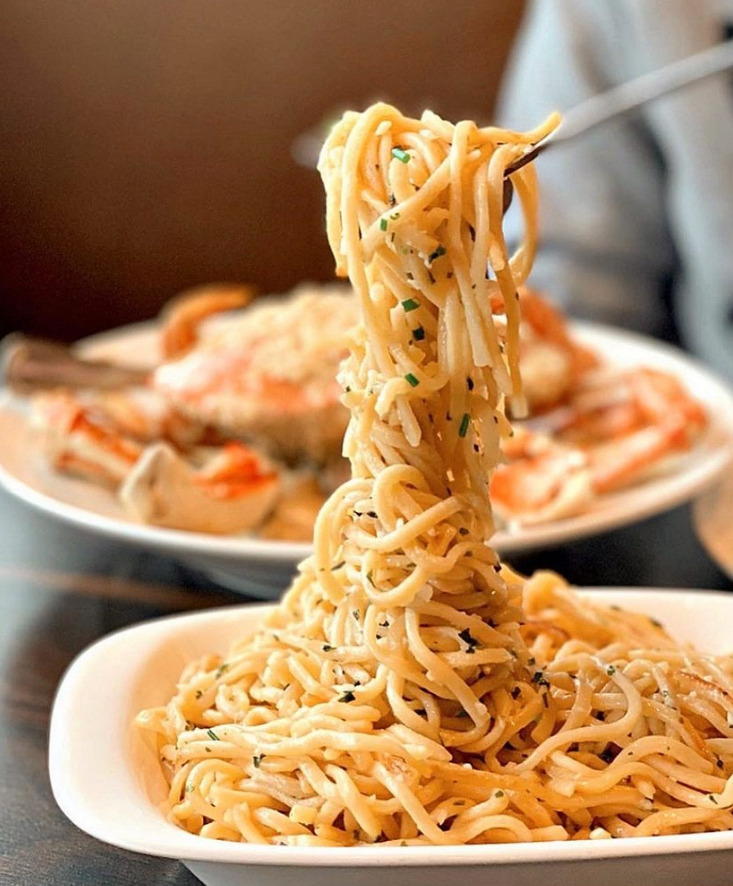
Write descriptions like a server, not a database. “Garlic Noodles” is a database entry. “Egg noodles tossed with butter, garlic, and parmesan — the dish people drive across the city for” is a server making a recommendation. You get one or two sentences per item and most restaurants use zero. Use them on your top fifteen and leave the rest alone.
What San Francisco’s 15% Cap Actually Covers
This is worth understanding precisely, because a lot of Bay Area owners have a fuzzy version of it in their heads. San Francisco made its 15% cap on third-party delivery commissions permanent in 2021, along with a 3% cap on credit card processing fees. Then the city amended it, with changes taking effect in early 2023, so that delivery companies can charge above 15% when a restaurant opts into additional services.
Two consequences follow, and they’re the ones that actually hit your P&L. First, the cap applies to delivery commission — it does not cap advertising and marketing spend on the platform. If your effective take rate is running well above 15%, the gap is very often ad spend and promotions you turned on and forgot about, not the commission itself. Second, “opting into additional services” is a real decision with a real price, and it should be reviewed quarterly like any other vendor line, not left on autopilot because someone from the platform called two years ago.
Also worth knowing: the cap is a San Francisco ordinance. If you also run locations in Daly City, San Mateo, Oakland, or Mountain View, you’re operating under different terms in each one. Owners with three or four stores across the Peninsula and the East Bay routinely assume a single number applies everywhere. Pull the statements per store and compare. The spread surprises people.
Promotions That Don’t Quietly Bleed You
Platform promotions are the easiest money to lose in this entire channel, because the interface makes them feel like marketing when most of them are just discounts with a dashboard. The test is simple and unforgiving: does this promotion bring in an order that would not otherwise have happened, or does it hand a discount to someone who was already going to order from you?
New-customer-only offers usually pass. A discount restricted to people who have never ordered from you is genuine acquisition. You’re paying to get someone to try the food once. That’s a defensible cost, provided your food and packaging are good enough that a first order has a real chance of becoming a second one. If your delivery execution is shaky, fix that first — otherwise you’re paying to show strangers your worst work.
Slow-daypart offers usually pass. A promotion that only runs Monday through Wednesday, or only between 2pm and 5pm, is buying you volume during hours your kitchen is already staffed and idle. The marginal cost of that order is low and the discount is coming out of capacity you were paying for anyway.
Blanket site-wide discounts almost never pass. Twenty percent off everything, all day, every day, run indefinitely — that’s not a promotion, that’s a price cut you’re describing as marketing. Your regulars find it within a week and it becomes your new price. If a promotion has been running for more than about six weeks, it has stopped being a promotion.
Put a recurring reminder in your calendar for the first Monday of every month to open both dashboards and look at what’s currently switched on. That five-minute habit catches more money than most of the things owners agonize over.
Turning App Orders Into Customers You Own
Here’s the strategic reality nobody at the platform is going to explain to you. When someone orders through DoorDash, DoorDash acquires a customer. You fulfill an order. Those are very different outcomes, and the difference compounds over years. The apps hold the relationship, the ordering habit, and the data. You hold a receipt.
You are not getting off the apps, and you probably shouldn’t try. The realistic goal is a slow leak in your favor — a small share of app customers each month who start ordering direct, follow you on Instagram, or simply walk in.
Put something in the bag. Every delivery order is a piece of physical mail you’re already paying to send. A small printed card with who you are, where you are, and one concrete reason to come in or order direct costs a few cents and rides along for free. Most restaurants send thousands of these a year containing nothing but napkins. Make the offer specific and make it expire — a free side on a dine-in visit in the next thirty days beats a vague “follow us” every time.
Make direct ordering genuinely easier, not just cheaper. If your own online ordering is a clunky page that takes eight taps and doesn’t save an address, no discount will move anybody. The direct channel has to be at least as smooth as the app before you start advertising it. Fix the flow first, then promote it.
Make the packaging worth photographing. A stamp, a sticker, a handwritten line on the lid. In the Marina and the Outer Richmond, plenty of delivery orders end up on somebody’s story before the first bite. That’s free reach you have full control over, and it costs less than a single day of platform ads.
Your Own Channels Still Have to Do the Work
The restaurants that get the most out of delivery apps are almost never the ones optimizing delivery apps in isolation. They’re the ones with a strong social presence and a well-tended Google Business Profile feeding demand into every channel at once, delivery included.
The mechanism is straightforward. Somebody sees your dry-fried green beans on a Reel, doesn’t act on it, and then three days later opens DoorDash on a rainy Tuesday in the North Bay and sees your name in the grid. They don’t remember where they saw you. They just feel like they’ve heard of you. That flicker of recognition is what wins the four seconds, and it was manufactured somewhere else entirely.
Which is why the same fifteen photos should be doing triple duty — delivery menu, Google Business Profile, and your own feed. One shoot, three storefronts, and a customer who keeps seeing the same food in the same style until it starts feeling familiar. Keep those systems separate and you pay three times for the same work.
What This Looks Like Over Ninety Days
Month one is the audit and the shoot. Open both platforms, pull the last three months of statements, and calculate your real effective take rate per location — commission plus ads plus promotions plus fees, divided by gross sales. Turn off anything running that you can’t justify out loud. Then shoot fifteen dishes properly and load them.
Month two is the merchandising. Reorder the menu around travel-worthy, high-margin, and known-for. Cut the dishes that don’t survive the drive. Write real descriptions on your top fifteen. Design and print the bag insert. Set your one new-customer offer and your one slow-daypart offer, and nothing else.
Month three is reading it. Compare order volume, average ticket, and effective take rate against your month-one baseline. Check whether direct orders ticked up at all. Then keep what worked and cut the rest, which is the same discipline that runs everything else in the building.
None of this is glamorous and none of it requires a new platform or a new app. It’s an afternoon of photography and three hours of settings work, applied to a revenue line most Bay Area restaurants have ignored for years while complaining about it constantly.
If you’d rather not spend those afternoons yourself — or you want the same photo library working across your delivery listings, your Google Business Profile, and your social feed instead of living in three disconnected places — that’s the work we do for restaurants across San Francisco and the Peninsula every week. Get in touch with Metaroots and we’ll take a look at what your listings are actually doing right now.